A Watercolor Squirrel Crafts a Story of Wisdom
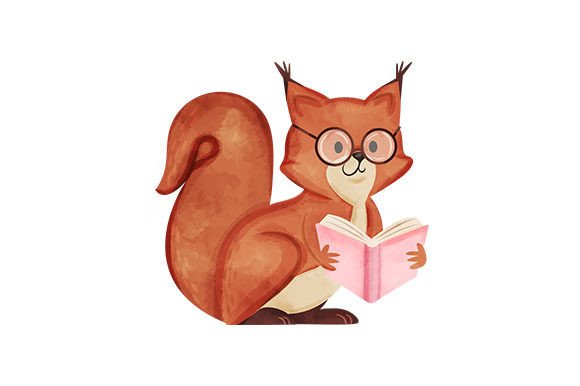
When I first opened the file for A Squirrel with Glasses Reading a Book - Watercolor, I paused. This wasn’t just clipart; it was a complete mood. The soft washes of color, the gentle texture of the brushstrokes, and that wonderfully whimsical subject—a scholarly little animal lost in a book—immediately suggested a project far beyond a simple graphic. It felt inviting, intelligent, and quietly charming. My mind started cataloging clients: a boutique stationery brand, a children’s literacy nonprofit, a cozy bookstore’s event poster, an Etsy shop selling handmade reading-themed accessories. This asset had a specific, potent character.
The Whimsical Scholar: Defining a Visual Tone
The central strength of this watercolor illustration is its emotional appeal. It doesn’t shout; it whispers a story of curiosity and calm. For a brand owner looking to cultivate a sense of warmth, authenticity, or intellectual playfulness, this squirrel becomes an instant ambassador. In a market saturated with sleek, geometric icons, this hand-painted style stands out. It communicates handmade, crafted, and personal. For projects targeting audiences who value tradition, learning, or gentle humor—think educators, librarians, crafters, or parents—this single graphic can set the entire visual tone.
Putting the Scholar to Work: Real-World Design Applications
In practical terms, this design asset is remarkably versatile for its niche. Provided with SVG, PNG, EPS, and DXF files, it’s ready for both digital and physical realms.
For printable designs and crafts, it’s a star. The transparent PNG makes it effortless to drop onto mockups for t-shirt design, mugs, or tote bags. The vector formats (SVG, EPS, DXF) are crucial for Cricut projects, enabling clean cuts for stickers, vinyl decals, or layered paper crafts. Imagine it as a focal point on a baby shower invitation, a detail on a bookstore’s loyalty card, or the hero graphic on a set of printable bookplates. It scales beautifully for wall art without losing the delicate watercolor texture.
In digital design, it serves as a potent accent. It can break up text-heavy layouts in blog visuals or editorial design. On social media, it becomes an engaging Pinterest pin or an Instagram post for a “quiet reading night” campaign. It could anchor a Canva template for a reading challenge. However, its role in core brand identity requires careful thought.
Where the Watercolor Squirrel Excels as a Supporting Element
This illustration thrives in spacious, intentional layouts. Use it as a hero graphic on a website landing page for a children’s author. Let it be a decorative repeat on the packaging for a specialty tea blend. Build a themed collection around it, pairing it with other literary watercolor elements for a cohesive product line. It’s perfect for adding a layer of narrative to marketing visuals where you want to evoke a specific, gentle feeling.
Considerations for Clean Visual Hierarchy
The intricate watercolor details mean this asset demands respect for scale and contrast. Avoid using it at very small sizes where the glasses and book details might become muddy. In crowded layouts, it can lose its impact and clutter the visual hierarchy. It’s not naturally suited for stark, minimalist branding or high-speed corporate materials where simplicity is key. Always test it on both light and dark backgrounds; the softer tones may require a slight boost in contrast or a strategic background color to ensure it remains legible and prominent.
A Designer’s Checklist Before Client Use
Before committing this squirrel to a real client project, I run through a professional vetting process.
- Scale Test: Preview the SVG at both massive and tiny sizes to see how the details hold up.
- Contrast Check: Place the PNG on pure white and dark gray backgrounds. Does it pop, or does it fade?
- Monochrome Review: Convert it to black and white. This reveals if the form is strong enough to work in single-color print scenarios.
- Font Pairing Exploration: How does it interact with different typography? A classic serif font reinforces the scholarly theme; a clean sans-serif might modernize it; a playful script could amplify the whimsy. Test combinations.
- Mockup Integration: Drop it onto actual product mockups—a mug, a t-shirt, a book cover. Does it feel integrated, or just pasted on?
- File Format Audit: For Cricut users, inspect the DXF or SVG paths. Are they clean and grouped logically for cutting? For print, does the EPS offer high-resolution output?
- The Ultimate Step: Confirm the commercial license. Never assume. Using a design asset for a client’s business project, print-on-demand line, or Etsy product requires clear, documented commercial usage rights.
Crafting Trust and Engagement with a Single Image
Ultimately, choosing an asset like A Squirrel with Glasses Reading a Book - Watercolor is about curating a client’s visual voice. This illustration, when applied thoughtfully, builds visual trust. It signals a brand that pays attention to detail, values narrative, and connects on an emotional level. Its uniqueness aids in recognition—customers will remember the charming, book-loving squirrel. It boosts audience engagement by being inherently shareable and conversation-starting. For a small business branding itself as craft-oriented and intelligent, or a creative marketplace seller building a cohesive collection, this watercolor piece can be the linchpin that makes the entire design direction feel polished, intentional, and complete. It’s more than a squirrel; it’s a strategic design decision.