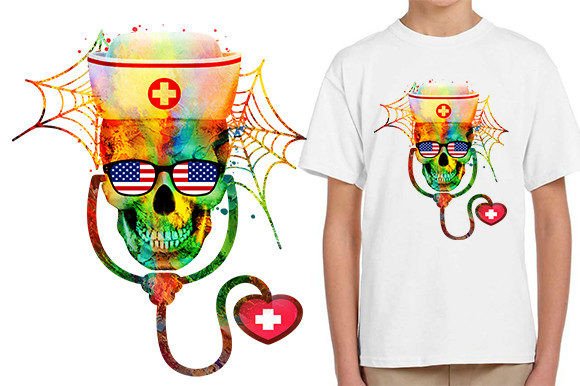
Watercolor Skull Nurse: A Versatile Graphic for Crafts and Merchandise
As a designer reviewing assets for client work, my first impression of Watercolor Skull Nurse is striking. It isn't a generic illustration. The delicate watercolor texture and the stark, thematic contrast between the floral skull and the nurse cap creates a mood that's both macabre and strangely elegant. It feels artistic, slightly rebellious, and curated, representing a blend of vintage botanical illustration and contemporary alternative style. This isn’t for a mainstream wellness brand; it naturally fits niche projects: a boutique apothecary shop, an indie book cover for a medical thriller, merchandise for a nursing student with a dark sense of humor, or seasonal campaign visuals for a Halloween-themed craft fair.
Where This Watercolor Graphic Finds Its Perfect Home
In real design situations, this asset excels as a focal point. For logo design or brand identity for a small, handmade business in the crafts space—think an Etsy seller of herbal remedies or dark academia stationery—it could be a powerful emblem. In packaging design, scaled large on a product label for a candle or tea blend, it instantly establishes a mysterious, artisanal tone. For posters, flyers, or invitations for a local alternative art show or a "spooky science" night event, it provides immediate visual intrigue. Its formats, particularly the SVG and PDF, mean it adapts beautifully for merchandise: t-shirt design, stickers, mugs, and tote bags become unique conversation pieces.
For digital sellers, it’s a robust social media graphics tool. As a hero image on a website for a creative marketplace shop, or as the core visual for a series of Pinterest pins and Instagram posts promoting a printable design collection, it grabs attention. Its watercolor nature makes it ideal for Canva templates where layers of text can overlay the softer areas. For Cricut projects, the SVG file allows clean cutting for decals and fabric printing, turning a digital product into a physical craft with ease.
The Ideal Layouts for Maximum Impact
This graphic works best in large layout areas where its texture can breathe. Use it as a full-back hero graphic on a t-shirt or a tote bag mockup. Let it dominate as the centerpiece of a poster or printable wall art. It shines as a decorative accent in a themed collection—pair it with other watercolor botanical elements for a cohesive campaign visual. For sublimation design on pillows or mugs, the high-resolution files ensure the gradients and details remain crisp. In these applications, it supports a strong brand element, building visual trust and emotional appeal with a specific, engaged audience.
Practical Considerations for Professional Use
However, a professional designer must also know where to apply caution. In small sizes, like a tiny logo on a business card, the intricate watercolor details and the skull's finer lines may become muddy, harming readability and recognition. Avoid crowded layouts where it competes with other complex visuals; it needs space to maintain its impact. On complex or low-contrast backgrounds, its softer edges might fade, disrupting visual hierarchy. It’s not suited for minimalist branding or professional corporate materials where clarity and simplicity are paramount. The asset carries a specific emotional weight; forcing it into a context that doesn’t match that mood will make the overall design feel disjointed and less professional.
Essential Designer Checks Before Client Delivery
Before committing this to a client project, I run a series of tests. First, I preview it in black and white to ensure the core silhouette and concept hold up without color, crucial for any potential single-color printing or embroidery adaptation. I check contrast by placing it on both light and dark backgrounds in a mockup; the watercolor strokes must remain distinguishable. I preview it at both thumbnail size and blown-up to confirm scalability. I place it on real product mockups—a t-shirt, a mug, a book cover—to see how it interacts with the product's form.
Test printing a sample, even digitally, is vital to ensure the PNG and JPEG files render the watercolor gradients without banding. I inspect the PNG transparency to confirm clean edges for overlay on website graphics or digital ads. For the SVG, I open it in a vector editor to confirm editability; can I easily separate the nurse cap from the skull if the client wants an adaptation? I experiment with pairing it with different font styles: a crisp sans-serif font for modern contrast, a subtle serif for a more editorial feel, or a handwritten script to amplify the artistic mood. Finally, I always verify the commercial license terms. Using a graphic design asset for a client's branding, marketing visuals, or print-on-demand merchandise requires unambiguous commercial usage rights.
The Final Verdict for a Creative Project
Watercolor Skull Nurse is a specialized but potent creative design asset. It won't fit every project, but for the right client—a handmade business, a digital seller targeting a niche audience, a content creator building a darkly aesthetic blog—it can elevate the visual concept dramatically. It provides a ready-made artistic direction that feels polished and intentional, saving design time while delivering a unique result. When applied thoughtfully to large-scale merchandise, compelling packaging design, or standout social media graphics, it fosters strong audience engagement through its distinct personality. For a designer curating assets for a bold, crafts-oriented brand, this watercolor graphic is a compelling tool worth serious consideration.